

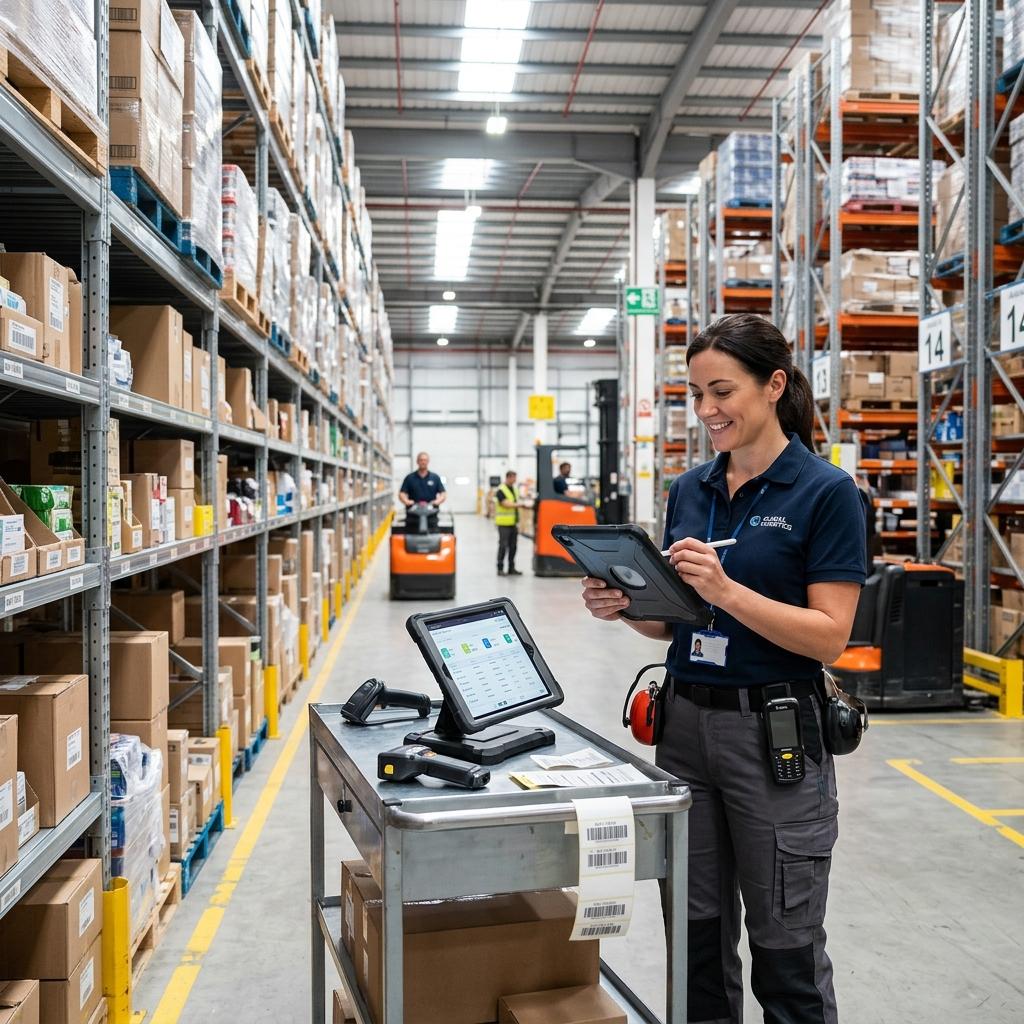
Retail Audit and Merchandising Execution Software for Field Sales Teams
IndeForms gives FMCG and retail field teams a structured, photo-led way to record what is actually happening in store — planogram compliance, share of shelf, stock-outs, pricing, promotion execution and competitor activity — geo-stamped and time-stamped at the point of the visit. Category and trade marketing teams then see execution as data the same day, instead of receiving a folder of photographs at the end of the cycle.
What spreadsheets cost a field sales operation
Field sales and merchandising is one of the last large functions still run on WhatsApp and Excel. A representative visits eight to twelve outlets a day, photographs shelves, notes stock-outs in a notebook or a phone note, sends images to a supervisor group, and fills in a visit tracker in the evening. The supervisor consolidates the trackers weekly. By the time a category manager sees anything, it is a summary of a summary, the photographs have been detached from the outlets they came from, and the numbers cannot be checked against anything.
The result is that the single most expensive thing an FMCG business does in the trade — buying visibility and executing promotions — is measured by assertion. Nobody can say with evidence which outlets had the display up on the launch date, which had the correct price on shelf, or which were out of the hero SKU during the campaign window. Trade spend is settled on claims rather than on proof. Competitor pricing arrives as an anecdote from whoever happened to notice.
There is a control problem underneath the reporting problem. Without location and time on the record, there is no way to distinguish a visit that happened from a tracker row that was typed at home, and everyone in the chain knows it. That single ambiguity undermines trust in every number built on top of the visit data.
The regulations retail field records touch
Field teams in food, beverage and packaged goods are often the only people who see the product in its final selling condition, which makes their records the first line of evidence for several statutory obligations.
Food Safety and Standards Act, 2006 and Schedule 4 of the FSS (Licensing and Registration) Regulations, 2011
Food Safety and Standards Authority of India
What it requires
Sanitary and hygienic requirements appropriate to the kind of business, including premises, personnel hygiene, pest control, storage temperature control and records demonstrating those controls, verified through inspection and food safety audit.
How IndeForms supports it
Hygiene and storage audits dispatched to distributor and outlet visits on a schedule, with photographic evidence per finding, temperature readings as validated fields, and non-compliances raising corrective-action tasks with an owner and a closure record.
Legal Metrology (Packaged Commodities) Rules, 2011 under the Legal Metrology Act, 2009
Department of Consumer Affairs and state Legal Metrology departments, India
What it requires
Mandatory declarations on the retail package including net quantity, maximum retail price inclusive of all taxes, month and year of manufacture or packing, and consumer-care details, all legible and correctly placed.
How IndeForms supports it
Pack-declaration checks captured with a photograph of the label and structured fields per declaration, with the outlet, date and location on the record so a finding can be traced to a specific pack at a specific point of sale.
ISO 22000:2018 and HACCP
International Organization for Standardization; Codex Alimentarius principles
What it requires
Hazard analysis, identified critical control points with defined limits, monitoring procedures, corrective actions when a limit is exceeded, and retained verification records.
How IndeForms supports it
Critical control point checks become validated fields with their limits built in, so a breach is flagged at entry, forces the corrective-action questions, and branches the workflow to the responsible manager immediately rather than at the next review.
Consumer Protection Act, 2019 and the CCPA Guidelines for Prevention of Misleading Advertisements, 2022
Central Consumer Protection Authority, India
What it requires
Claims must not be misleading, and material terms and conditions of an offer must be disclosed clearly; the advertiser is expected to be able to substantiate claims.
How IndeForms supports it
In-store activation audits capture what was actually displayed, with photographs, outlet identity, date and location, so the executed communication can be evidenced rather than reconstructed from an agency report.
FDA Food Safety Modernization Act, including the Food Traceability Rule (21 CFR Part 1 Subpart S)
US Food and Drug Administration
What it requires
Preventive controls with monitoring and verification records, and, for listed foods, maintenance of traceability records with key data elements at critical tracking events.
How IndeForms supports it
Batch and lot identifiers captured by barcode at each handling point rather than typed, with quantities in repeatable rows, so a traceability record accumulates from the field instead of being assembled after the fact.
IndeForms provides the capture, scheduling, evidence and retention controls behind these obligations. It does not certify a product, a label or an outlet, and it does not file a return on your behalf. Assessment and sign-off remain with your food-safety and legal teams and their auditors.
How fmcg & retail workflows run on IndeForms
Each of these is a real configuration of the platform — dispatch, offline capture, approval and reporting — not a roadmap item.
Store visit audit with verified presence
The retail audit is the core transaction of the whole function. It only produces trustworthy data if the record proves the visit happened at the outlet, at the time claimed.
Dispatch
The day’s beat plan is generated by scheduled dispatch from an outlet list, mapping spreadsheet columns onto form fields so each visit arrives pre-filled with outlet code, name, channel, route and the last visit’s open issues.
Field capture
The representative opens the visit at the outlet. A geo-control question records the location, and a proximity rule warns when the device is not near the registered outlet coordinates. Shelf photographs, share-of-shelf estimates, planogram compliance and stock-outs are captured per category, with one repeatable row per SKU checked. Everything works offline, because the back of a store is not a good place to depend on signal.
Escalation
A stock-out on a priority SKU or a planogram breach beyond a threshold branches immediately to the area sales manager and the distributor, rather than waiting for a weekly consolidation. A run-scoped variable carries the visit reference through every notification and downstream call.
Report
Compliance by outlet, route and region, stock-out frequency by SKU, and visit coverage against plan are all queried from the same submissions, and a scheduled report puts yesterday’s exceptions in front of the sales leadership each morning.
Outcome: Every visit carries its own proof, exceptions reach the person who can fix them the same day, and coverage against the beat plan stops being self-reported.
Competitor price and promotion tracking
Competitor intelligence collected informally is unusable: it arrives as messages, it is not comparable between representatives, and it cannot be trended.
Dispatch
Competitor tracking rides along with the store visit rather than being a separate errand, so it is captured on every visit instead of when someone remembers.
Field capture
Competitor SKUs come from a managed source list, so the same product is never recorded under three different names. Price is a validated numeric field with a plausible range, promotion mechanics come from a fixed option set, and a photograph of the shelf tag backs every price entry. On-device text extraction can read the price from the tag photograph into the field instead of the representative typing it.
Review
Statistical checks flag prices that sit far outside the observed distribution for that SKU and region, so a transposed digit is queried rather than silently averaged into the pricing view.
Report
Price bands by region and channel, promotion-mechanic frequency and share-of-shelf movement are queryable directly, and pricing teams can ask the data questions in plain language rather than requesting a new report.
Outcome: Competitor data becomes structured, comparable and evidenced, which is the minimum condition for anyone to price against it.
Promotion execution audit and trade-spend evidence
Trade spend is usually the second-largest line in an FMCG P&L and the least evidenced. The audit exists to make payment conditional on proof rather than on a claim.
Dispatch
Activation audits are dispatched to the outlets participating in the campaign, timed to the launch window, with the campaign reference and the agreed display elements already on the form.
Field capture
The representative photographs each display element against its checklist item, records whether the agreed shelf space and pricing are in place, and captures footfall or consumer-interaction counts where the mechanic calls for them. Photographs carry timestamp and location, so evidence is tied to the outlet and the date rather than floating in a shared album.
Approval
Claims route through the area manager and then the trade marketing team as approval steps. A shortfall against the agreed execution can be sent back to the outlet or distributor with the specific failing element, and closure requires fresh evidence.
Report
Execution rate by campaign, region and outlet feeds the ROI review, and the evidence pack behind any settlement is an export from the same records.
Outcome: Trade spend is settled against dated, located, photographic evidence, and execution quality becomes a metric the campaign can be judged on.
Distributor and outlet onboarding
Onboarding is where bad master data enters the system, and bad master data quietly corrupts every report built on it for years afterwards.
Capture
The representative completes onboarding at the outlet: business details, statutory registration references, banking details, photograph of the shop front, and the exact coordinates that will anchor every future visit’s proximity check.
Validation
Registration and identifier fields are validated by pattern on entry, and an API question can verify a reference against your master-data or ERP system while the representative is still standing in the shop, rather than failing three days later in a batch load.
Approval
Onboarding routes through the area manager and the commercial team as sequential approvals, each able to send it back for a specific correction without discarding the rest of the submission.
Report
Approved outlets push into the distribution system through a connector, and onboarding cycle time, rejection reasons and coverage growth by territory are reportable.
Outcome: New outlets enter the system with validated data, a verified location and an approval trail, so the beat plan and every downstream report start from a clean base.
Which capability solves which problem
The platform features behind the workflows above, mapped onto the constraints this industry actually works under.
You cannot tell a real visit from a typed tracker row
GPS capture, geostamping and proximity rules
Visits carry location and timestamp, per-field geostamps can be enabled at dispatch, and a geo-proximity condition warns when a visit is being recorded away from the registered outlet coordinates.
Photographs arrive detached from the outlet they came from
Evidence attached to the answer
Camera questions attach directly to the checklist item they evidence and travel with the submission through approval, export and PDF, carrying their own timestamp and coordinates.
One visit covers dozens of SKUs
Repeatable sections with source-backed option lists
One row per SKU inside a single submission, with products drawn from a managed source list so naming stays consistent, plus inline totals and calculated compliance scores.
Signal is unreliable in the back of a store or a rural market
Offline-first capture
Product lists, forms and rules sit on the device. Full visits including photographs are captured offline and sync automatically when the representative regains coverage.
A stock-out is discovered in next week’s consolidated report
Threshold-driven branching and notification
A priority stock-out or a planogram breach branches the workflow the moment it is submitted, notifying the area manager and the distributor rather than waiting for a weekly roll-up.
Every new question needs a new report from IT
Ask your own data in plain language
Submissions are queryable as columnar data, and a conversational analytics layer turns a plain-English question into safe read-only SQL that runs against your own data — with results rendered as charts, never sent to a model provider.
Use cases we support out of the box
Common forms and processes fmcg & retail teams build first.
Store Visit & Merchandising Audits
Planogram compliance, share-of-shelf photos, and stock-out reporting with auto-routing to category managers.
Competitor Price & Promo Tracking
Structured competitor SKU capture with photo evidence and price elasticity insights for pricing teams.
Distributor & Outlet Onboarding
KYC, location verification, photo-of-shop, and document capture flows for new trade partner activation.
In-Store Activation & Trade Promotions
Activation execution proof, footfall capture, and ROI input for trade marketing investment decisions.
Order Capture & Field Sales
Product catalog-driven order forms with credit checks, GPS validation of visits, and CRM-grade reporting.
The argument we used to have every month was whether the display was actually up during the launch week. That argument does not happen any more, because the photograph has the outlet, the date and the coordinates on it.
Trade marketing lead, packaged foods
Representative of conversations with teams in this sector, not a named customer reference.FMCG & Retail FAQs
The questions buyers in this industry ask before they shortlist a platform.
Markets and store backrooms have poor signal. Does the audit still work?
Yes. The app is offline-first. The outlet list, product master, form definition and rule logic are downloaded to the device in advance, so a full visit including shelf photographs is captured with no connectivity and uploads automatically when the representative is back in coverage.
Our product master changes constantly. Do we rebuild the form every time?
No. Option lists can be backed by a managed source rather than typed into the form, so updating the source updates every form that uses it. Sources are versioned and cached per version on the device, which means a representative reopening a form does not re-download an unchanged list, and a changed list propagates without a form redesign.
A day of audits produces a lot of photographs. How is that handled?
Media is captured against the specific answer it evidences and uploaded with the submission when connectivity allows, rather than being pushed live during the visit. Photo and media capture rates are themselves reportable, so you can see which outlets or representatives are consistently submitting without evidence.
Can approved outlets and orders flow into our distribution or ERP system?
Yes. Submissions can be pushed out as an API webhook, an SFTP file or an email PDF, and structured connectors map individual fields onto target fields in SAP S/4HANA or Dynamics 365. An API question type can also validate a code or fetch credit status from your system while the representative is still in the outlet, so bad data is rejected at the point of capture rather than in an overnight load.
Do we need a BI team to get anything out of the data?
Not for the common questions. Submissions are transformed into columnar storage and queried in-process, so completion rates, field-level distributions, geospatial density and time-of-day patterns are available as dashboards out of the box. A conversational analytics layer turns a plain-English question into read-only SQL that runs against your own data, and useful queries can be saved, scheduled as an emailed report, or pinned onto a custom dashboard.
Ready to see store execution as data instead of anecdotes?
Give us your current visit tracker and one campaign’s execution checklist. We will show you the geo-verified, photo-backed, exception-routed version and the dashboard your category team would open each morning.